
Custom Outdoor Tiles: Materials, Techniques and Care
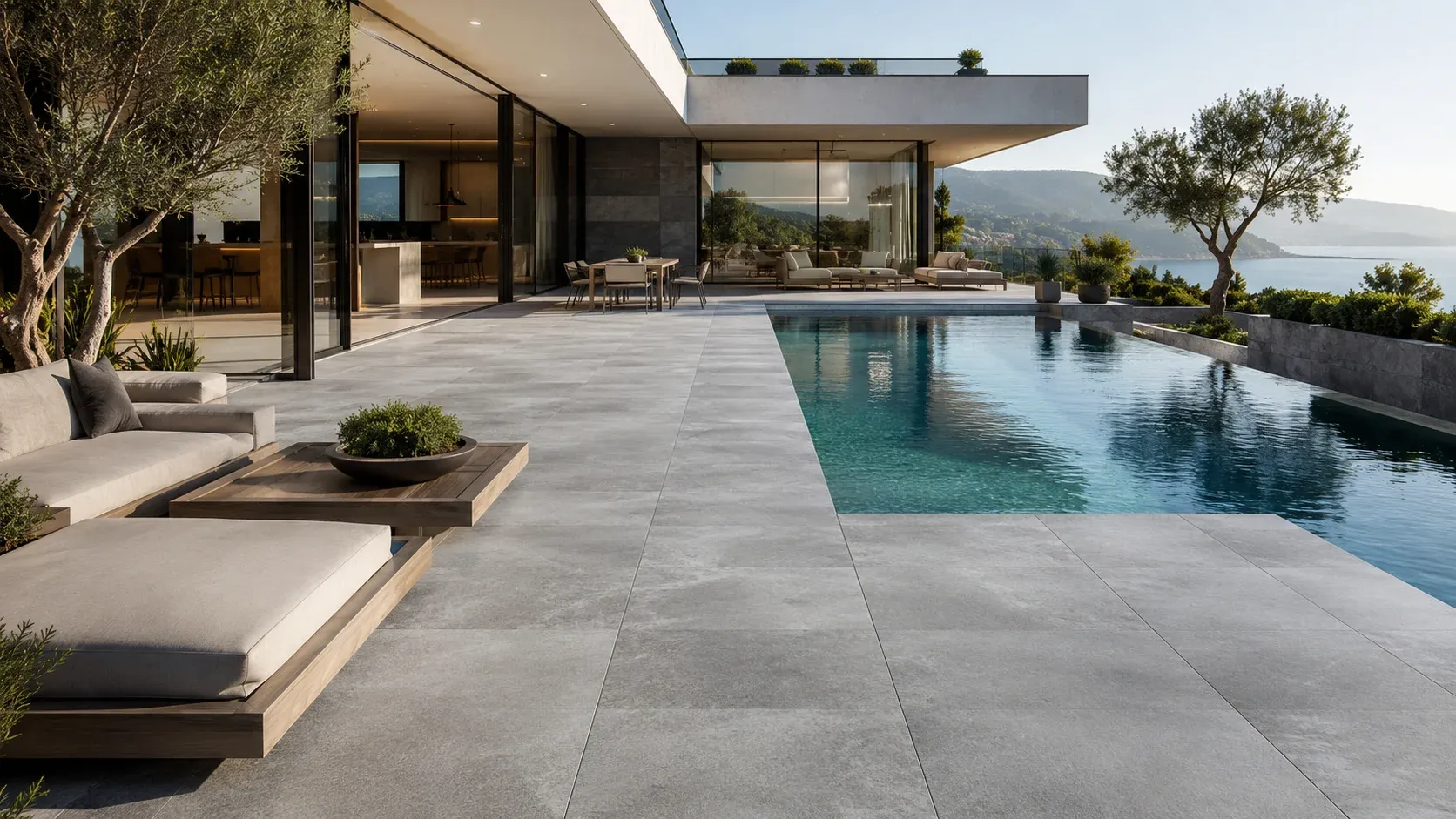
In short: custom outdoor tiles carry a name, an address, a logo or a full mural on a weatherproof surface. Choosing the right material for the climate, and the right decoration technique for the exposure, decides whether the piece still looks sharp in ten years.
What are custom outdoor tiles?
They are ceramic or porcelain tiles decorated to order and designed to withstand rain, sun and, in the right material, frost. Typical uses:
- Signage and nameplates. House names, street numbers and business signs.
- Murals. Multi-tile compositions for garden walls, patios, terraces and building entrances.
- Plaques. Commemorative or dedication tiles for gardens and public spaces.
They are found in homes, restaurants, hotels, squares and institutions.
Choosing the material
Glazed ceramic (including majolica)
Traditional glazed ceramic, such as majolica, has a handmade look and rich colour. It is hand-painted over a glaze and fired again to fix the design. It is a good choice in moderate climates, where freeze-thaw cycles are not severe.
Porcelain
Porcelain is dense and has very low porosity (water absorption of 0.5% or less in group BIa, EN ISO 10545-3, on the references that declare it). It is the safe option for snow, hail, strong sun or sharp temperature changes, and it is the usual material for street signs and murals in public spaces. Its frost resistance is confirmed on the data sheet of each reference.
How the decoration is made
- Hand painting. Coloured oxides are applied over a base glaze and fixed in the kiln. It allows complete creative freedom and gives a tactile, individual result.
- Digital ceramic printing. Photographic images, fine logos and graphic patterns are fused into the surface, often with a clear protective finish. It suits branding and contemporary murals.
- A combination. Some workshops print a base image and then add glazes or hand-painted touches before the final firing.
Durability: what to consider
- Frost and heavy rain: choose dense porcelain.
- Mild climates: glazed ceramic works well.
- Photographic prints in full sun: place them in shade where possible, or ask the maker about a protective finish suited to exterior use.
- Installation: an exterior-rated adhesive and grout, correct preparation of the substrate and movement joints are essential. A good tile installed badly does not last.
Tell the maker the climate and the exposure of the site, because the right specification depends on them.
Formats and shapes
Square formats (for example 10×10, 15×15 or 20×20 cm) are common for murals. Rectangular formats are common for signage. Hexagons and fully bespoke outlines are also possible. Texture, relief and non-slip finishes can be specified when the piece is part of a walking surface.
Where it is used
- Residential: nameplates on entrances, patio and garden murals.
- Hospitality and commerce: outdoor branding and terrace murals for cafés, restaurants, hotels and shops.
- Public and institutional: street name tiles, historic plaques and murals for schools and community spaces.
How a commission works
- Choose the material according to the climate.
- Decide the size and shape.
- Supply or develop the design. Artwork, or a collaboration with the maker’s team.
- Plan the technical split. For a mural, decide how the image divides across tiles, for manufacturing and installation.
- Agree the quote and the schedule. Times depend on the technique, the quantity and the complexity, so they are always confirmed by the maker.
Care
- Clean with non-abrasive products.
- Avoid strong chemicals, which can damage glazes and printed finishes.
- In very sunny or extreme climates, ask the maker whether a protective coat should be renewed over time.
Frequent questions
How long do they last? With the right material, a professional installation and a suitable finish, they can last for decades. Dense, high-temperature-fired porcelain is the most robust.
Are hand-painted tiles as durable as printed ones? Both can be, if they are fired correctly and installed outdoors with exterior-rated adhesives. In strong sun, printed images benefit from a protective finish.
Can I order a single piece? Some workshops accept small orders, such as one plaque. For murals, sets are the norm. Minimum quantities are confirmed with the maker.
Using porcelain for a custom exterior project
Azelnex supplies Spanish porcelain, adhesive, grout and tools for projects in one proforma and one shipment. If your project includes custom or decorated pieces, tell us in your enquiry and we will confirm whether we can serve it.
Request a proforma · See what we supply · Read also: Tiles for exterior facades